

How to Build a HIPAA-Compliant Telehealth MVP for the U.S. Market in 2026
Launching a telehealth MVP in the United States is not mainly a video-call project. It is a workflow, privacy, and integration project. The first release has to support one complete care journey while protecting patient information across identity, scheduling, intake, messaging, video, clinical notes, and any connected vendor.
For most startups, the right MVP is not a full virtual-care platform. It is a focused patient and provider experience with secure access, BAA-backed vendors where required, role-based permissions, auditability, and a clear path to EHR/FHIR integration.
A practical first release usually includes patient intake, appointment scheduling, secure video, secure follow-up messaging, provider notes, and basic operational controls. Deeper EHR integration, e-prescribing, billing automation, remote monitoring, and AI should be added only when the pilot or buyer requires them.
The Quick Takeaway
A strong telehealth MVP supports one complete care journey rather than trying to recreate a hospital platform. Start with secure access, patient intake, scheduling, video, follow-up messaging, provider notes, role-based permissions, audit events, and the minimum operational controls required for the pilot.
A tightly scoped pilot may be ready in roughly eight to twelve weeks when the workflow is clear, vendor contracting moves quickly, and deep EHR or e-prescribing work is not on the critical path. A broader production launch can take three to five months or longer because procurement, security review, integration testing, and clinical operations add time.
A Founder Checklist Before You Start Development
Before you move into design or development, make sure you can answer yes to these questions:
- Do we know the exact care journey for version one?
- Do we know whether mobile, web, or a mixed setup fits that workflow best?
- Have we listed every vendor that may touch patient data?
- Do we know which vendors can sign a Business Associate Agreement (BAA)?
- Are we limiting version one to the core workflow instead of every future idea?
- Have we left room for EHR or FHIR work later?
- Do we understand what will drive cost before development starts?
- Has someone reviewed the data path, roles, and access rules?
Who This Guide Is For
We built this breakdown for founders working on:
- A virtual care platform for a private practice.
- A patient portal focused on scheduling and follow-up.
- A mental health platform with secure messaging.
- A remote patient monitoring product for the US market.
- A team that may later need device data, alerts, or reimbursement-aware workflows.
- A care workflow tool that will eventually connect to electronic health records.
Before you commit to a platform, check our guide on When Your Startup Should Not Build a Mobile App to ensure you're making the right choice for the US market.
Telemedicine vs. Telehealth: Getting the Definition Right
People often blur these terms together, but founders shouldn't. Telehealth is a broad category that includes admin tasks, patient education, and non-clinical support. Telemedicine points specifically to the clinical side: diagnosis, treatment, and direct care delivered remotely.
That distinction matters. If your product supports clinical care and handles protected health information (PHI), privacy obligations become much more serious. It also changes how you think about the experience for doctors, patients, and staff. That is why your first question should not be about coding language. The better question is: What is the narrowest clinical workflow we can launch first?
What Belongs in Your First Release
When pitching your telemedicine platform to investors, the MVP features you highlight might easily drift toward advanced analytics, wearable device data, and artificial intelligence ideas. Those sound great in a meeting, but they rarely belong in version one.
1. Secure Onboarding and Access Rules
Most telemedicine teams end up building two sides at once: one for patients and one for doctors. The patient side needs intake, booking, and reminders. The provider side needs calendars, patient context, and visit notes.
Patients should only see their own records, and clinic staff should only see what matches their role. For clinics, the portal matters because it cuts paperwork, reduces missed appointments, and makes follow-up easier.
2. Video Visits (Use a Vendor)
For healthcare, secure video is a basic requirement. But startups should not build custom video infrastructure from scratch in version one. It is usually smarter to use a vendor that supports clinical workflows and is prepared to sign a Business Associate Agreement (BAA).
3. Messaging and Follow-Up
For many platforms, the most used feature is not video. It is messaging. Patients want a quick way to follow up, and clinicians need a secure channel that does not depend on personal phones. That is why chat often becomes one of the most important parts of the product.
4. Scheduling Operations
Do not underestimate scheduling. Time zones, clinician availability, intake forms, and cancellations affect daily operations more than most founders expect. For many products, appointment scheduling becomes the operational foundation. It keeps clinic staff happy and cuts down manual data-entry errors.
5. Leaving Room for Data Exchange
You do not need deep hospital integrations on day one. But you do need to leave room for them. In most startup healthcare products, EMR work becomes important once doctors start asking where notes and records should live. In the USA, FHIR is often the path teams take later when they need structured data exchange and broader interoperability. (You can read ONC’s developer guidance on FHIR to understand the standard better).
6. Device-Ready Remote Monitoring
If remote monitoring is part of your roadmap, leave room for device data early in the app development. In the US market, some clinic buyers will want more than video over time. That can mean support for blood pressure cuffs, heart monitors, or other tools that help manage chronic conditions from a distance.
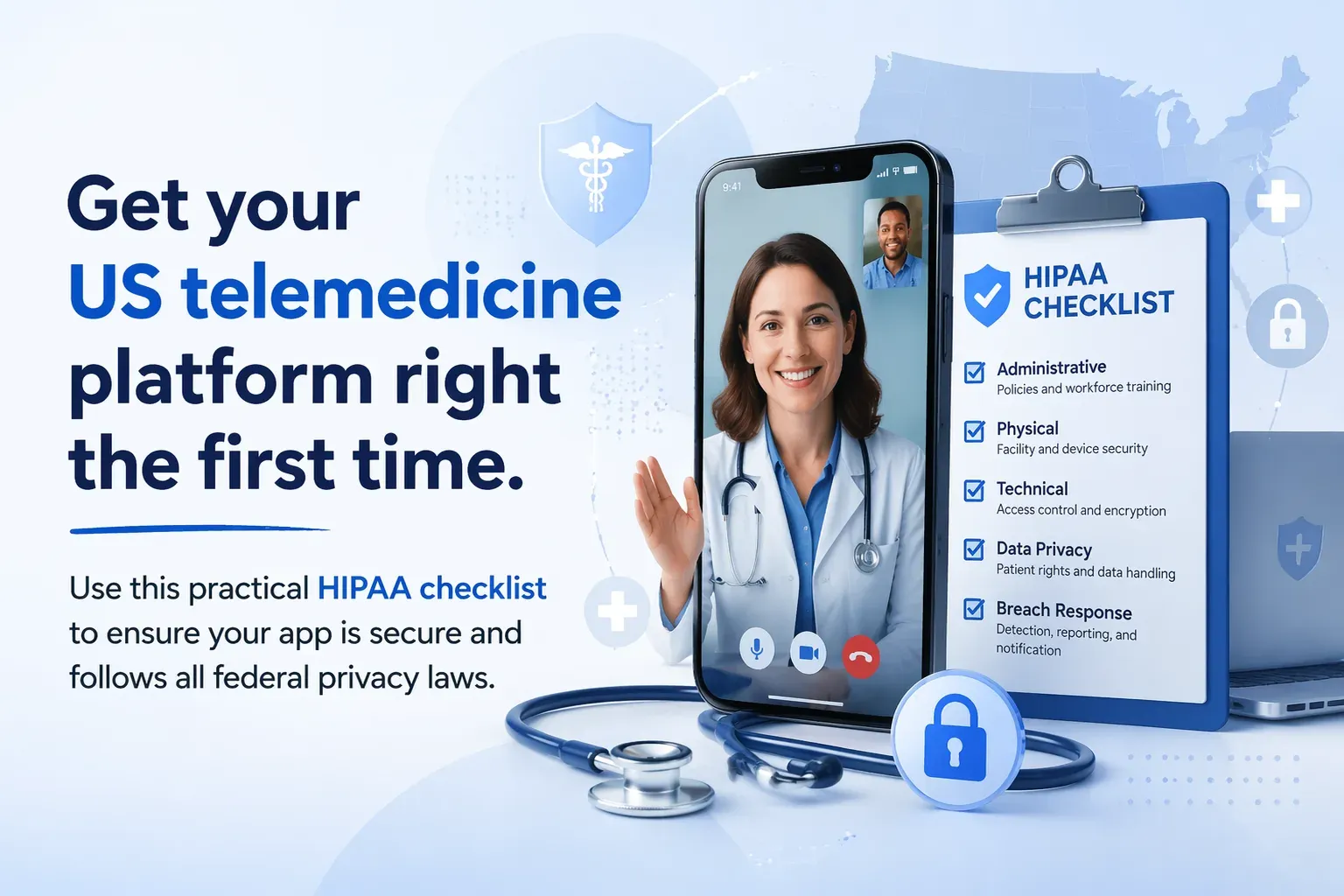
A Practical HIPAA Checklist
A lot of online content talks about compliance in vague terms. A practical HIPAA checklist for a mobile MVP should cover what actually happens on the ground:
- List every third-party vendor that creates, receives, or stores PHI.
- Confirm which of those vendors will sign BAAs. (Review the HHS guidance on HIPAA for telehealth technology to understand vendor rules).
- Document who has access to which databases.
- Plan how audit logs are stored and how user sessions expire.
- Determine exactly what data temporarily sits on a user's physical device.
For healthcare apps in the USA, security is not just about encryption. Permissions, logging, device storage, and vendor contracts matter just as much.
Web App or Mobile App First?
Choosing whether to build a mobile app or start with a web app is a huge decision for a telehealth startup. The answer depends on who uses the software the most. If patients need to log in frequently, mobile usually leads. If clinicians are managing care from a desk all day, a web dashboard makes more sense. A mixed setup, mobile for patients, web for providers, is incredibly common.
Tech Stack and Hosting
Founders often start comparing hosting options early. For healthcare apps in the USA, AWS, Azure, and Google Cloud can all work. What matters more is whether your team handles access controls, vendor agreements, and PHI correctly.
On the front end, React Native can be a practical choice for telemedicine teams in the USA. It gives you one codebase for iOS and Android, which helps keep the first release more manageable.
Finding the Right Development Team
If you are hiring in the USA, do not judge app developers by design portfolios alone. In healthcare, the right partner should understand PHI, access controls, vendor risk, and phased delivery. That matters even more when you are choosing an app development partner for a healthcare startup, not just a team that can build and execute screens.
Ask them how they handle PHI data flows, local storage, audit trails, and phased rollouts. If you are comparing your options, our guide on In-House vs Agency vs Freelancers: How US Startups Build Mobile Apps will help you narrow down your choices.
Budgeting for the Build
Telemedicine app cost in the USA depends less on the screens and more on what sits behind them. A basic booking flow sits in one pricing range. A product with secure messaging, provider roles, BAA-backed video, and strict audit logs is a very different type of build.
A mental health app in the USA may stay relatively lean if it only handles therapy scheduling. The price moves up quickly when you add crisis alerts, monitoring, or more complex workflows.
The same applies to API usage. Costs shift quickly when you factor in The Hidden Costs of Third-Party APIs in Mobile Apps.
Managing the Timeline
Founders always ask how long it takes to build a telehealth app. The answer is usually tied to pilot planning or fundraising. A narrow product for one medical specialty can move fast—usually within 3 to 5 months. Timelines only stretch when you try to add too many dashboards, complex permissions, or custom video features into version one.
A technical audit before development is one of the best ways to catch heavy features early and keep version one focused.
Where AI Fits Right Now
We are currently building AI case studies for healthcare startups in the USA, but AI should not be the center of version one unless the product depends on a specific diagnostic or operational use case.
Start with intake, booking, video visits, messaging, and a clean provider workflow. After that, add carefully reviewed AI features where they truly reduce admin work or improve follow-up. If you want to explore that path, read Does Your Startup Need AI in 2026.
Before You Write Code
A medical platform sits at the intersection of patient trust, provider workflow, and privacy obligations. Start with one clear care journey. Use the right vendors. And before engineering begins, have an experienced team review your data path so the product starts on solid ground.
You can also explore our Mobile App Development Services, or reach out if you want to Hire Mobile App Developers before development begins.
FAQ About Telemedicine App Development
Starting a new project or
want to collaborate with us?