

Mobile App Development Cost in USA (2025): Real Pricing for Android, iOS, Flutter & React Native
If you’re planning to build a mobile application in the United States, one question becomes unavoidable:
“How much does it actually cost to develop an app in the USA in 2025?”
The truth is, the U.S. mobile app ecosystem is one of the world’s most competitive and expensive markets. The expectations for quality, design, speed, and stability are significantly higher compared to most other regions. Whether you're exploring Android app development, iOS app development, or considering a cross-platform framework such as Flutter development or React Native development in the USA, the cost landscape varies widely depending on complexity, performance standards, and region.
This guide breaks down every cost factor so founders, CTOs, and product leaders can make confident budgeting decisions — without relying on vague industry guesses or misleading “average app cost calculators.”
Why You Should Trust This Guide
At Budventure Technologies, we’ve spent 7+ years building mobile apps for startups and enterprises across the USA and India. Our team has delivered applications in fintech, healthcare, logistics, SaaS, education, e-commerce, and on-demand services, using Android, iOS, React Native, and Flutter. This guide is based on real project data, U.S. market benchmarks, and experience working with founders who needed accurate cost structures before scaling their products.
TL;DR — Mobile App Development Cost in USA (2025 Guide)
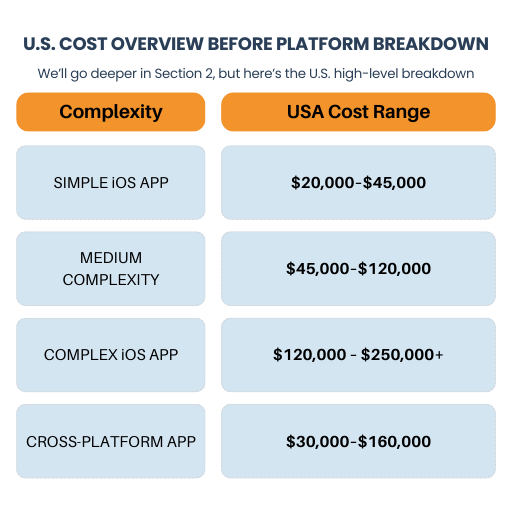
- Basic mobile apps in the USA cost $25,000–$60,000, depending on features, UI/UX, API complexity, and platform.
- Mid-complexity apps cost $60,000–$120,000, including real-time features, integrations, and scalable architecture.
- Advanced apps cost $120,000–$300,000+, especially those built with AI, streaming, geo-tracking, or marketplace modules.
- Android, iOS, Flutter, and React Native all have different cost structures — platforms matter more than founders realize.
- Hiring US-based developers increases cost due to high demand, whereas offshore teams lower cost only if they maintain quality standards.
- The biggest cost drivers are: App size, UI/UX depth, API structure, AI usage, team seniority, and post-launch scaling requirements.
- You can reduce costs by prioritizing features, using cross-platform tech, and avoiding cheap developers (they generate rework, increasing final cost).
- For accurate cost prediction, you’ll need a requirements brief, which lets developers estimate effort realistically.
Who This Guide Is For
This guide is written for:
- Startup founders in the USA and India are planning to build their first mobile app
- Businesses comparing iOS vs Android vs Cross-platform development
- Entrepreneurs exploring 2025 app development pricing trends
- Companies looking to hire mobile app developers without overpaying
- Product teams preparing budgets for new app builds or app modernization
- Anyone evaluating realistic design, development, and scaling costs
If any of these describe your situation, this guide will save you from unexpected costs, misleading quotes, and wrong tech decisions. If you're comparing different price ranges and want a clearer app development cost breakdown, this guide explains not only the mobile app development cost in the USA but also what influences the final price—whether you are estimating the cost to develop a mobile app, analyzing app creation cost, or evaluating how much it will cost to design an app for different platforms.
The Real Reason App Development Is Expensive in the USA
The cost structure isn’t random — it reflects three major realities in the U.S. market:
1. Senior Mobile Talent Is Scarce and Highly Paid
After the massive shift toward AI and automation roles in 2023–2025, many experienced engineers transitioned into AI-driven positions. As a result, demand for mobile app developers in the USA, including Android developers, iOS developers, and Flutter developers, has consistently exceeded supply.
This shortage pushes engineering rates significantly higher, and those rates directly influence the overall mobile app development cost in the USA, especially for mid- and large-scale projects.
2. U.S. Users Expect Premium Quality from Day One
The modern American user will instantly abandon an app that feels slow, unstable, or outdated.
This forces companies to invest more heavily in:
- high-end UI/UX
- real-device testing
- performance optimization
- accessibility compliance
- security features
- data encryption
- seamless user journeys
If you're targeting a U.S. audience, cutting corners on quality almost always ends up costing more later in the form of rewrites, poor retention, and low app-store ratings.
3. Performance, ANR Reduction & Device Compatibility Add Hidden Costs
Even though the U.S. has a higher percentage of premium smartphone users, Android still covers dozens of manufacturers and device profiles. Ensuring a smooth experience across these devices increases testing hours and performance optimization costs.
Improving crash-free rates, reducing ANRs, and maintaining optimal performance standards directly affect your overall Android app development price in the USA.
Compare Mobile App Vs Web App for Your Startup for a deeper breakdown of how performance issues increase costs.
Before you spend a single dollar on design or development, make sure you actually need a mobile app at this stage. Our guide When Your Startup Should Not Build a Mobile App (Yet) walks through the signals US startups should look for before committing to iOS or Android builds.
Key Factors That Determine App Development Cost in the USA
Understanding these factors is essential before estimating the price of your Android, iOS, or cross-platform app.
1. Scope & Complexity
Complexity is the #1 driver of cost in the U.S. market.
- Simple apps (login, profile, basic flows)
- Medium-complexity apps (payments, dashboards, push notifications, admin panels)
- Complex apps (marketplaces, on-demand platforms, fintech apps with compliance needs, real-time chat, GPS, AI integration)
The more features, roles, and integrations you add, the higher your total custom mobile app development cost will be.
2. Platform Choice: Android, iOS, or Cross-Platform
Your cost changes significantly depending on the platform:
If you're building:
- Android app development → more device testing & ANR optimization
- iOS app development → higher design standards, fewer device variations
- Flutter app development → reduced development hours, but still requires native optimization
- React Native app development → strong for startups seeking faster delivery
Choosing between native and cross-platform directly impacts development hours, QA workload, and long-term maintenance costs. The platform you select also affects your application development cost. For founders wondering how much creating an app costs, the answer depends heavily on whether you select Android, iOS, Flutter, React Native, or custom application development.
3. UI/UX Quality Expected in the U.S. Market
American users expect premium mobile experiences. This means investing in:
- professional UI architecture
- accessible, ADA-friendly screens
- consistent motion design
- responsive layouts
- intuitive information hierarchy
This heavily affects both Android app design cost and iOS app design cost in the USA.
4. Backend Complexity
Backend development can consume 30–50% of your total budget, especially for apps requiring:
- real-time data
- chat
- streaming
- user roles and permissions
- analytics
- API orchestration
- cloud-based scalability
This directly ties into backend development cost and API integration cost in the USA.
5. Third-Party Integrations
Integrations such as Stripe, Twilio, Google Maps, AWS, Firebase, and AI models add hours and increase cost.
The greater the integration complexity, the higher the final mobile application development bill.
6. Performance, Stability & Compliance Requirements
For U.S. markets, strong performance isn't optional — it's expected.
You must account for:
- crash-free sessions
- ANR rate improvement
- Play Store performance
- App Store rejection-prevention
- HIPAA (if applicable)
- SOC 2 compliance
- PCI DSS compliance
This especially impacts enterprise mobile app development and fintech/healthcare apps.
7. Level of QA & Testing
High-quality QA lowers long-term maintenance costs, but increases your initial budget.
In the U.S., QA often includes:
- manual testing
- automated regression tests
- performance testing
- device lab testing
- usability testing
This influences your total app testing cost
These numbers align with research from sources like Statista.
Platform-Wise Cost Breakdown (Android, iOS, Flutter, React Native) + U.S. Regions + Hidden Costs
Now that you understand the macro-factors influencing mobile app development cost in the USA, let’s break it down platform-by-platform. Each platform has its own cost structure, testing requirements, performance optimization needs, and talent availability, which dramatically shape your final budget.
1. Android App Development Cost in the USA (2025)
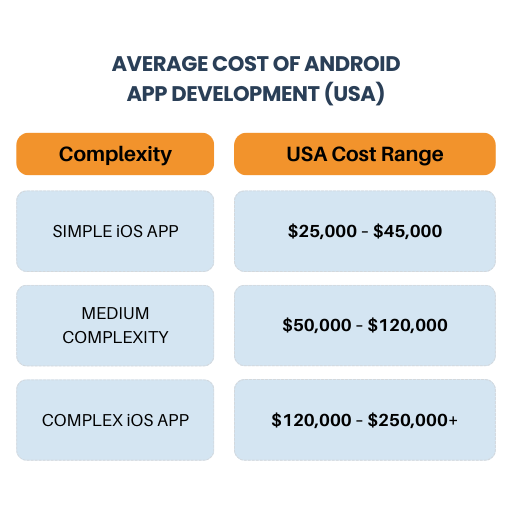
The cost of Android app development tends to be higher compared to other regions because U.S. businesses require:
- high device compatibility
- flawless performance across Samsung, Pixel, OnePlus, Motorola, etc.
- strict ANR thresholds
- strong accessibility compliance
- Play Store policy readiness
Why Android Costs Increase in the USA
Here are the hidden factors U.S. founders don’t realize until they are deep into development:
1. Device Fragmentation = More QA Hours
A U.S. Android app must function smoothly on dozens of device combinations. This increases QA testing hours, which directly raises the total Android app development price.
2. ANR & Crash Optimization
Google now penalizes apps with high ANRs (Application Not Responding). Optimizing for ANRs requires:
- performance profiling
- memory optimization
- background thread fixes
- main thread clean-up
These can add 40–120 extra engineering hours, depending on complexity.
3. Higher Expectations from U.S. Users
Americans expect:
- instant load times
- intuitive UI
- seamless animations
- no freezing
- strong battery optimization
All of these raise mobile development costs.

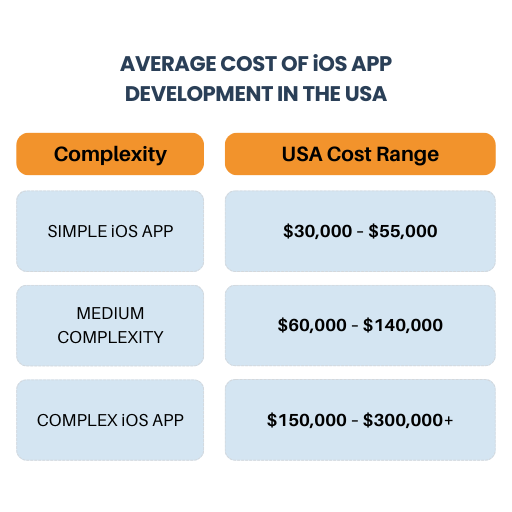
2. iOS App Development Cost in the USA (2025)
The U.S. is the largest iOS-heavy market in the world. Roughly 57% of Americans use iPhones, especially in high-income cities like NY, LA, San Francisco, and Seattle.
This means if you’re building for the U.S., iOS is not optional—it’s a profit requirement.
Why iOS Apps Cost More in the U.S.
Because Apple users demand:
- premium UI
- pixel-perfect design
- smooth animation curves
- compliance with Apple HIG (Human Interface Guidelines)
- strict App Store approval
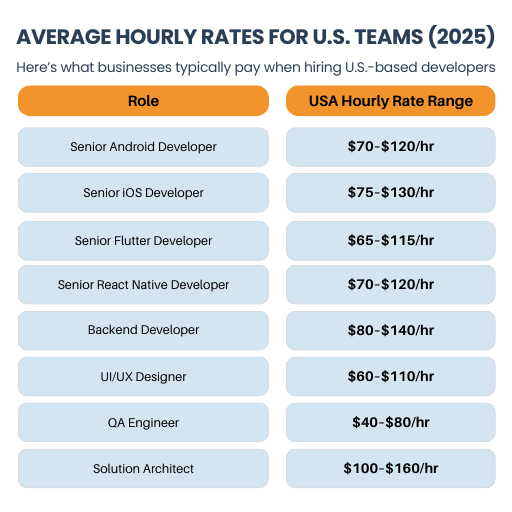
Additionally, senior iOS developers in the USA often charge $75–$130/hr, which increases the final iOS app development cost.
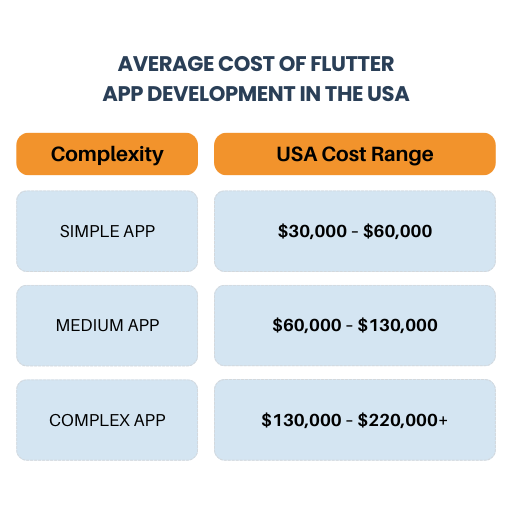
3. Flutter App Development Cost in the USA (2025)
Flutter is extremely popular among U.S. startups because it allows:
- faster development
- a single codebase for both Android + iOS
- native-level UI flexibility
- lower long-term maintenance costs
However, Flutter is not always cheaper. It depends on the design complexity and integrations.
When Flutter Saves You Money
Flutter reduces cost when:
- The app’s UI is similar for Android & iOS
- There is shared business logic & simple backend integrations
- You want faster MVP development
When Flutter Costs Increase
Flutter becomes expensive when:
- You need highly custom UI animations
- You require many native device features
- You’re integrating heavy APIs (maps, video, Bluetooth, OCR, AI)
- Performance optimization is critical
This influences your final Flutter app development cost.
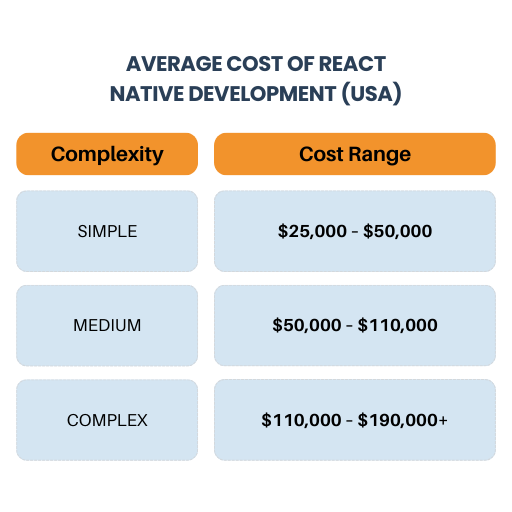
4. React Native App Development Cost in the USA (2025)
React Native remains a strong option for startups that want to build quickly, especially if their web team is familiar with JavaScript/React.
When React Native Is a Good Choice
React Native works best when:
- You need a fast MVP
- You want shared components between web + mobile
- You don’t need extremely custom animations
- Your app is content or data-driven
Hidden Costs of React Native
- Requires native modules for advanced features
- Requires more performance profiling for large apps
- Requires dedicated QA for both platforms
This impacts your React Native app development budget.
5. U.S. Region-Based Pricing (Costs Vary by State)
Your development cost also changes depending on where the U.S. development team is located.
USA Region Cost Breakdown:
- New York (NY) & California (CA)
Most expensive regions
Hourly Rates: $110–$180/hr - Washington, Massachusetts, Colorado
High-level tech talent
Hourly Rates: $90–$150/hr - Texas (Austin), Florida, Georgia
Balanced pricing + high-quality teams
Hourly Rates: $65–$110/hr - Midwest (Ohio, Kansas, Michigan)
More affordable
Hourly Rates: $50–$90/hr
This alone can change your mobile application development budget by 40–70%.
6. Hidden Costs Founders Often Miss
Every founder should be aware of these:
1. App Store & Play Store Compliance
U.S. apps require stricter compliance:
- Data privacy
- User opt-in screens
- COPPA (if minors are involved)
- US-based payment rules
- Encryption requirements
This adds development hours.
2. Real Device Testing
U.S. testing labs may test on:
- multiple generations of iPhones
- 20+ Android devices
- different OS versions
- different screen resolutions
This directly increases QA cost.
3. Infrastructure & Hosting
AWS, GCP, and Azure pricing in the U.S. is higher.
Apps needing:
- real-time functionality
- AI-driven features
- push notifications
- geo-tracking
…will incur higher backend & DevOps cost.
4. Maintenance & Post-Launch Cost
U.S. apps typically require:
- monthly updates
- security patches
- library upgrades
- OS-level compatibility
- analytics + crash monitoring
Businesses often spend 15–25% of the original app budget every year. These additional expenses often catch founders off guard when calculating the cost of developing an app. Even basic apps have infrastructure, QA, monitoring, and update requirements that impact the real cost for app development beyond the initial estimate.
Industry-Based App Cost, Timelines, USA vs India Comparison & How to Reduce Cost Without Sacrificing Quality
Now that you understand platform-specific pricing and regional cost differences, it’s time to explore how industry, features, timeline, and location directly shape the real-world mobile app development cost in the USA.
Your choice of development team directly impacts cost. Learn more in In-House vs Agency vs Freelancers.
Most founders underestimate the influence of industry requirements until deep into development. Fintech, healthcare, logistics, or on-demand apps are not priced the same as a simple marketplace or social app. Each vertical brings unique technical, UX, and compliance challenges. Different industries also impact the mobile apps development cost. For instance, fintech, healthcare, e-commerce, or on-demand apps require custom flows, security, and integrations that significantly increase the total cost of app development.
Let’s break these down clearly.
1. Industry-Specific Mobile App Development Costs in the USA
Below is the most accurate industry-based breakdown for 2025, based on U.S. engineering rates and feature expectations.
A) Fintech App Development Cost (USA):
Fintech apps require:
- bank-grade security
- KYC/AML integrations
- payment processing
- encryption
- fraud monitoring
- compliance audits
These significantly increase development hours and backend complexity.
Fintech App Development Cost:
$150,000 – $350,000+
B) Healthcare / Telemedicine App Cost (USA):
A healthcare or medical app must comply with:
- HIPAA
- data encryption standards
- patient privacy laws
- medical record handling guidelines
Also, real-time video integration raises cost.
Healthcare App Cost:
$180,000 – $400,000+
C) On-Demand App Development Cost (USA)
On-demand apps—Uber-like, food delivery, home services—need:
- real-time driver tracking
- geolocation APIs
- scheduling logic
- two-sided marketplace flows
- dispatching algorithms
On-Demand App Cost:
$120,000 – $300,000+
D) Marketplace App Cost (USA)
A marketplace requires:
- buyers & sellers
- product catalog
- payment flow
- order management
- admin dashboards
Marketplace App Cost:
$140,000 – $280,000+
E) AI-Powered App Development Cost (USA)
AI-based apps have sharply increased in demand:
- AI chat
- voice assistants
- OCR
- face recognition
- recommendation engines
- predictive analytics
These require high backend compute + model integration, increasing cost.
AI App Development Cost USA:
$160,000 – $450,000+
2. Timeline Breakdown: How Long Does It Take to Build an App in the USA?
The timeline directly affects the budget. Faster timelines = bigger engineering teams = higher cost.
Here’s the real 2025 U.S. timeline breakdown:
Simple Mobile App Timeline
2–3 months
Suitable for:
- login
- profiles
- dashboards
- simple forms
Medium-Complexity App Timeline
4–7 months
Includes:
- payments
- admin systems
- push notifications
- advanced UI
- integrations
Complex App Timeline (Fintech, Healthcare, AI, On-Demand)
8–15 months
Includes:
- real-time features
- multi-role dashboards
- advanced logic
- compliance
- performance optimization
- AI features
This directly influences your enterprise mobile app development budget.
3. USA vs India Mobile App Development Cost Comparison
This part is critical because it helps justify your business model when pitching investors or planning budgets.
USA Cost (Average):
- Simple: $20,000–$45,000
- Medium: $50,000–$120,000
- Large/Complex: $150,000–$350,000+
India Cost (Average):
- Simple: $5,000–$15,000
- Medium: $15,000–$45,000
- Large/Complex: $45,000–$120,000
Why India Is 60–70% Cheaper
- lower engineering rates
- larger talent pool
- faster team availability
- reduced operational overhead
- flexible pricing models
But here is the nuance:
Many U.S. companies mix both regions:
- Strategy + architecture → U.S. team
- Development + QA → India team
- Performance optimization → hybrid
This hybrid model often cuts 40–60% of the total mobile app development cost without compromising quality. This cost comparison helps founders understand why the mobile application development cost can vary so widely between regions, and what factors influence the cost to make a mobile app in different markets.
4. Proven Ways to Reduce App Development Cost Without Sacrificing Quality
Founders frequently overspend simply because they’re unaware of industry best practices.
Here’s how to reduce cost safely:
1. Build an MVP First (Not the Full App)
Focus on core features only.
This reduces:
- UI complexity
- backend load
- QA hours
Your MVP mobile app development cost drops by 40–60%.
2. Choose Cross-Platform (Flutter or React Native)
If your app doesn't require heavy custom animations or advanced native features, choosing:
- Flutter development USA
- React Native development USA
…can reduce development time by 30–50%.

3. Avoid Overbuilding V1
Founders often add too many features in the first release:
- referral program
- loyalty points
- advanced analytics
- animations
- multi-role dashboards
These bloat the budget.
4. Use Pre-Built Backend Services
Instead of building from scratch:
- Firebase
- Supabase
- AWS Amplify
These reduce backend development costs significantly.
5. Use a Hybrid Development Model
An architect in the U.S. + build in India is the most cost-effective structure for:
- Android app development cost
- iOS app development cost
- Cross-platform app development cost
This hybrid model offers:
✔ top-tier quality
✔ lower price
✔ faster delivery
6. Avoid Extremely Cheap Developers
Hiring $5/hr developers often leads to:
- poor architecture
- unstable code
- rewrites
- app crashes
- poor security
- wasted time
You end up paying 2–3× more to fix the damage later.
Check out our blog on the Top 10 mistakes startups make when developing an app
Many businesses assume hiring a freelancer or low-cost offshore agency will drastically reduce their app development fee, but this often results in hidden costs, rework, and delays. Whether you plan to hire an app developer, hire a programmer, or hire a full team, your choices directly affect the final application development cost and long-term maintenance.
5. Final Cost Summary (2025 Updated)
- Native Apps (Android + iOS)
$120,000 – $400,000+
(for both platforms) - Cross-Platform Apps (Flutter / React Native)
$60,000 – $220,000+ - Enterprise Apps
$180,000 – $450,000+ - AI/ML-Based Apps
$160,000 – $450,000+ - MVP Apps
$20,000 – $60,000
Common Mistakes Founders Make When Estimating App Cost (And How to Avoid Them)
Even well-funded startups lose money because of incorrect assumptions. Here are the biggest mistakes:
1. Starting Without a Product Strategy
Missing user flows, unclear use cases, or unnecessary features can inflate cost by 40–70%.
2. Hiring Low-Budget Developers
Cheap developers create technical debt — slow APIs, poor architecture, weak security — which can double long-term costs because you’ll need a rebuild.
3. Choosing the Wrong Platform for Your Audience
Launching on iOS when your customers are mostly Android (or vice versa) increases acquisition cost and reduces ROI.
4. Not Planning API Architecture
Bad API design results in unstable apps and delays. Good architecture reduces costs months later during scaling.
5. Skipping Performance Optimization (ANRs & Crashes)
Fixing crashes post-launch is always more expensive.
Ultimately, the cost to develop an app depends on the clarity of requirements, platform choice, and development expertise. Whether you are developing an app for the first time or scaling an existing one, understanding the complete app creation price and real-world variables ensures you avoid overspending.
Conclusion: What This Means for Your Mobile App Budget in the USA (2025)
Estimating the true mobile app development cost in the USA requires more than a surface-level price range. Your platform choice, industry, feature depth, backend complexity, and performance expectations all shape the final number — and in a market as mature as the United States, quality is not optional. Whether you’re building for Android, iOS, or using Flutter or React Native, success depends on making the right technical decisions early and choosing a team that can balance U.S.-level engineering standards with cost efficiency.
For founders planning their next product cycle, the most important takeaway is simple: budget deliberately and build strategically. Overbuilding, unclear product scope, rushed timelines, and poor development choices are the four biggest reasons U.S. app budgets spiral out of control. If you invest in the right architecture, performance strategy, and roadmap from day one, you’ll avoid the rewrites and failures that cost startups months and tens of thousands of dollars.
Why Budventure Technologies Is a Smart Fit for USA Startups & Product Teams
At Budventure Technologies, we specialize in helping U.S. startups build high-performance mobile apps with a hybrid development model — combining U.S.-level product strategy with India-based engineering efficiency. This gives founders the best of both worlds: premium quality, faster delivery, and dramatically lower development cost. Our team has built apps across fintech, healthcare, marketplace, and on-demand industries, with a strong focus on ANR reduction, performance optimization, clean architecture, and long-term maintainability.
If you’re planning to build a new app or want clarity on the budget, timeline, and technical approach, we can help you define the right direction before a single line of code is written.
- Explore our mobile app development services
- Hire dedicated mobile app developers
- Request a tailored cost estimate
A well-planned build is always cheaper than a rushed one — and the decisions you make today determine how stable, scalable, and successful your app becomes in 2025 and beyond.
FAQ on Cost of Mobile App Development
How much does it cost to create an app in the USA in 2025?
The cost to create an app in the USA ranges from $25,000 to $300,000+, depending on features, complexity, UI/UX quality, backend requirements, and performance standards. This includes the full app development cost breakdown such as design, development, APIs, testing, deployment, and ongoing updates.
How much does app development cost for Android or iOS?
Android and iOS have different cost structures. The Android app development cost usually increases due to device fragmentation and ANR optimization needs, while the iOS cost is impacted by design quality expectations and App Store review guidelines.
How much does a mobile app cost to build for a startup?
A startup-grade mobile app typically costs between $25,000 and $120,000, depending on features and performance needs.
Can I hire an app developer or app programmer for my project?
Yes. You can hire app developers, dedicated programmers, or a full team depending on your budget. However, extremely cheap developers often increase long-term application development cost due to poor architecture and technical debt.
How much does it cost to design an app?
UI/UX design costs range from $3,000 to $25,000+ depending on the complexity, number of screens, animations, and design system requirements.